|
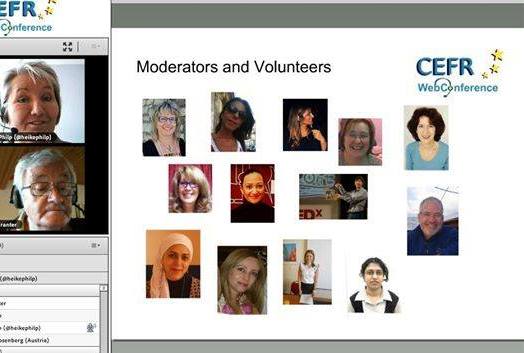
For the third annual SL MOOC 2016, Second Life® was at its best once again, with amazing professionals in the field of teaching in Virtual Worlds, presenting, amongst an array of topics and prominent professionals, different aspects of using virtual environments to enhance their learners' educational experience. On Pionia Destiny's (Doris Molero) plot, Heike Philp enthusiastically presented the outcome of EVO ViLLAGE 2016* and the moderators' team, together with the usefulness and necessity of training teachers to create games in 3D world. On 28th April 2016, on EduNation Island, with my presentation "Lessons from a Skybox - Using SL immersive environments to teach EFL", I explained how 3D World can bring on positive backwash effect for different types of learners on exam oriented classess. Based on a short scale survey, learners find lessons in Second Life® useful, interesting and friendly. According to this mini survey, confidence is boosted in the target language, learner concentration span increases, course participants prepare for real-life scenarios and they become more observant through "digital events" in this VW. Through holodeck scenes especially created for the purposes of language lessons, learners are given witty tasks to carry out which encourage language in use, natural communication and promote language development, while at the same time learners acquire new digital skills which enhance cognition and different domains of learning. The third annual Second Life MOOC 2016 was an unforgettable series of educational events wonderfully hosted by Dr. Doris Molero (Prof. English, Urbe University), Dr Nancy L. Zingrone (Prof. Psychology, Northcentral University), and Dr Nellie Deutsch (Curriculum Consultant, Online Facilitator, University of Phoenix online). (Pionia Destiny, Maggie Larimore and Nellie Homewood, avatar names in SL). The MOOC took place from April 1-30, 2016 and its theme this year was "Connecting for learning in Virtual Worlds". On my part, I presented an aspect only of the multi-purposeful, interdisciplinary use of 3D environment, for the purposes of teaching English as a Foreign Language. Thank you Doris, Nellie and Nancy. Looking forward to more SLMOOC events to come in the future. Helena Galani * EVO ViLLAGE stands for "Virtual Language Learning and Gaming Environments"

0 Comments
It has been almost a year now since I embarked on MachinEVO course for language teachers online. Since my CAMELOT award (1st prize) and as Moderator of this year's EVO ViLLAGE, I have developed a new approach to viewing teacher education which opens up new paths to education and teaching. All this along with my personal strong convinction of the usefulness of Virtual 3D environments in education, encourage me to reflect on my own experience during the 8th SLanguages Annual Symposium 2015 (which I had inadvertently omitted) . The Symposium came as a most outstanding event just before the end of a year characterised by vigorous activity at all levels in the world of education. With EduNation Island, Second Life® being a hive of activity for many years now, the Symposium came, once again, to confirm the ongoing effort, unfaltering energy and care which are invested in quality education to create and maintain learner supportive environments, to improve living standards, and promote levels of sustainable development. During the 8th SLanguages Symposium, speakers from around the world reflected on their recent professional experience with teaching and researching in 3D environments. Moderated by Professor Randall Sadler, (University of Illinois, Dept. of Linguistics, co-owner of EduNation islands in Second Life), Heike Philp (co-initiator of EU funded LANCELOT, AVALON and the CAMELOT project), Christel Schneider (Research Assistant for the CAMELOT Project at the University of Central Lancashire, founder of CSiTrain), Carol Rainbow (author, ICT consultant & teacher trainer), Helen Myers (teacher of French, Chair of London ALL), Shelwyn Corrigan (Learn IT Town, University of San Fransisco), Ann Nowak (ELT teacher), Hazel Workman (3D animator, technology consultant) and Helena Galani (ELT/EAP educator, assessor), the successful event provided ample evidence of the tireless and powerful work being done in Virtual Worlds for education. Amongst other prominent presenters and researchers*, Keynote Speaker Stylianos Mystakidis (Learning Technologist and E-learning Manager, University of Patras, Centre for Vocational Training) focused on "Social Virtual Reality: Open Education’s Surprising Secret Sauce" by guiding us through a series of exciting activities to stimulate learners' mind in our classrooms. On 14th November, the first day of the Symposium, surrounded by an enthusiastic and creative group of like-minded colleagues, I presented the usefulness of "SL Machinima for Young & Teenage Learners". The recordings for my presentations can be viewed on the SLanguages webpage and my slides are uploaded here: Also, below please find the slides for my presentation on "From Board Games to Role Plays" (15th November, 2015). The transformational experience in Virtual Worlds goes on and it has a lot to offer to all levels of education.
More news is coming up soon about this year's running TESOL EVO Virtual Language Learning And Gaming Environment course for teachers (EduNation Island, Second Life, 11/1 - 14/2/2016). Helena Galani * 8th SLanguages Annual Symposium Speakers:
TO CREATIVITY Through this post, I would like to present how I see metaverse can promote 'eu zein' (το εὖ ζῆν /ef zin/, wellbeing in ancient Greek) as a teaching medium in the language classroom. After all, “Life I owe to my parents, virtuous life I owe to my tutor.” as Alexander the Great put it ("Στους γονείς οφείλω το ζην, στους δε διδασκάλους το ευ ζην"). So this post approaches learner and teacher skills and competences from a different angle as there is already plenty of literature on the 8 interdependent Key Competences or the 21st century 4 Cs. This entry is dedicated to our parents and teachers and to G. (Syrmas)Vizyenos, the Greek scholar, poet and pioneer of short prose whose study in 1881 focused on the use of play from a psychological and pedagogical perspective.(1) As founder of contemporary Greek narrative, he opened the path for a new literary form of prose with his inventiveness. It comes as bitter realisation that, as a medium carrying strong messages about life and human existence, Literature (or literature) tends to be omitted in most EFL textbooks and classrooms as it is, wrongly, judged to be impractical in serving specific linguistically structural aims. Instead, it is amplified in mother-tongue language studies or on language degree courses in Tertiary Education. For non-native speakers of English, we should not be too fast to rule out the significance of 'divine literature' in stimulating learner language development, in enhancing sensitivity to language-in-use, in appreciating literary style and, eventually, in promoting life ideals and shaping personality. If coursebooks are not strong enough a medium to illustrate all this, then TEFL machinima may be a more powerful tool to catch learner attention to this linguistic genre, with special reference to Young Learners. With all the animation, music, visuals and game effects simulating real life, educational literary machinimas in TEFL can act like an attention-grabber of, otherwise, easily distracted learners who would much rather spend their days playing inworld games. With parents generously investing in their children's use of technology for gamification or communication, why should language teachers neglect the ubiquitus of metaverse to tackle learner varied paces and multitasking habits? In other words, in a world where technology has become second nature, interest in the study of literature through this medium - and in particular, 'literary TEFL machinima' - justifies the most tech savvy learners' high expectations at any age. It comes to promote appreciation of the aesthetic significance of literary works without running the risk of demoralising the learner in the process of literary analysis, semantic, phonetic or stylistic interpretation. Whatever the lesson aims, focus on pedagogical stylistics through machinimas can be employed as a means to promote the functional significance for text analysis through intuitions, interpretative skills, class research on locutionary/illocutionary/perlocutionary acts. Similarly to 'Lives I', the second episode also promotes what would otherwise be a reading activity, through an oral communication chanel as most people tend to resort to and to be exposed to oral sources of input out of convenience nowadays. Without disregarding learner types/learning styles ofcourse, the reading skill is - for most younger learners who have not received training to expand their concentration span - an overly demanding skill requiring activation of multiple physical and mental processes. But this is perhaps a forthcoming guest entry on my site. To go beyond the classical gap-filling, spelling, multiple choice, multiple matching or sentence completion types of exercises, I suggest more teacher-friendly exercises that promote learner interpretation, reader exploration, involvement and reflexion. or, eventually, discovery of author intentions. Whatever the original aims of the writer though, meaning and Interpretation are always in the eye and the ear of the beholder, as long as there is language produced, the text is not deconstructed 'irreversibly' and there is no shift of focus from the lesson aims. Interpretation of literary texts in the EFL classroom is always subject to the predisposition or age of the interpreter and their overall life stance. To encourage learner participation, class bonding and literary appreciation rather than depreciation, clear selection of tasks is of utmost importance. Since language is a social fact, as social actors, learners can be assigned any of the following meaningful, purposeful and less mechanical tasks, in groups or individually through the aid of ELT literary machinimas - subject to their age range - to grasp the interrelationship between poetry or prose with real life. The level of difficutly is mainly determined by the type of task(s) set in relation to the literary text:
With particular reference to making language learner machinimas in response to my literary one ('Lives II'), my younger learners instantaneously absorb the target language as part of a game process. It is more pleasant and meaningful to recite a poem and a rhyme or set it to music than to memorise a bilingual list of new words which are never to be stored in active long-term memory anyway. Montessori M. said that playing is a child's job anayway. Through play, both young and adult learners are cognitively involved, learn to take control of learning and become active communicators in charge of their own learning process. Students take more initiative and become the centre in a learner-directed class. It is not my intention to plagiarise possibly existing scientific evidence in the field but from empirical practice I come to confirm that through this relatively new medium of teaching, the learner develops cognitive and metacognitive control and gains personalised pursue of progress, achievement and reflexion on the language, cultures and learning processes. Whatever their age, with 'happiness hormones' released in their brain in a secure environment, learners are surely more eager and prepared to work towards immediate results by employing all their senses and monitoring feelings (own and others'), to better understand social roles and to manage thinking and behaviour. With the use of literature-integrated machinima (learner or teacher-made), all this is amplified to help the learner better process emotional information, develop emotional traits (eg empathy) and balance them to navigate their life and environment. With particular reference to my 'Lives II' machinima, to promote family values, Cultural awareness and appreciation, learners could carry out class research based on the notion of motherhood/fatherhood in their country or the origins of different types of music* In education, there are no winners or losers. Education is not about punishment, hegemony or on the other end, meaningless self-eudaimonism. It is every educator's aim to prepare unharmed and useful achievers with successful and positive experiences, thus saviouring and strengthening their uniqueness through incentives. If there is a wrong which might disturb our class balance, appreciation of the value of time is essential and this is best done by employing friendly learner-centred approaches to reach a solution and lead students beyond self-actualisation or metamotivation. Maslow explains this process (1967): "Self-actualizing people are, without one single exception, involved in a cause outside their own skin, in something outside of themselves". And ancient Greeks since Herodotus devoted themselves to being «καλός κ' αγαθός» 'good (handsome) and virtuous'. For aeons now, χρόνος chronos has taught us: there is no room for experimenting or resorting to time-consuming procedures since 'we are what we repeatedly do. Excellence, therefore, is not an act but a habit..' (Aristotle, 384-322 BC). The intended message to learners and teachers is that, if we are to accept the notion of transformative learning as the goal of education, it is essential to go through a self-igniting process materialising from within which leads to more humanistic dimensions beyond critical thinking. There may be more to life than Metaverse but this is also a brilliant place to start from, and all I am hoping to achieve is softly swing the cradle with one machinima at a time. ** Belly dance music - set as background music in 'Lives II' - was meant to wake up the earth and gods, and to symbolise female substance and idiosyncracy. It derives from rituals in the name of Aphrodite and Artemis to practise eugenics and bashful femininity. Arabic music originates from Byzantine echoes and Systema ametabolon, enharmonium, chromatikon, diatonon. (http://el.wikipedia.org/wiki/Χορός_οριεντάλ) The avatar's kimono encouraged discussion on Japanese and local costumes and occasions, and in my teaching set-up, it led to a discussion on the similarities between the Greek and Japanese mother role models. For further reading you may wish to try
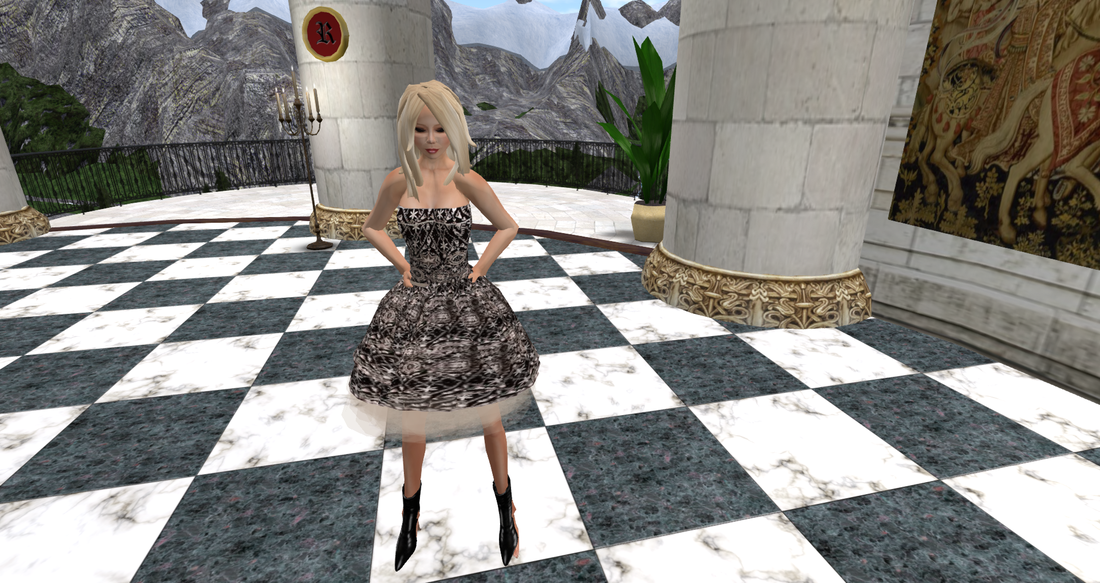
Austin, J. L. 1962. How to do things with words. London: Oxford University Press Genette, G. (1980) Narrative discourse, Oxford: Basil Blackwell. Maslow, A. (1971) The Farther Reaches of Human Nature Todorov, T. (1966) 'Les categories du recit litteraire'. Communications, 8:125-51 (1) Vizyenos G., (1881) 'Das Kinderspiel in Bezug auf Psychologie und Padagogik' available on Anemi archive, University of Crete http://anemi.lib.uoc.gr/metadata/b/6/9/metadata-106-0000080.tkl (special thanks for the permission to use this link) Widdowson, H. G. (1975) 'Stylistics and the Teaching of Literature', Longman This post has been written with all my dedicated colleagues in mind; with all my respect to all miracle makers who support life. Also a big Thank You to Chic Aeon for her contributions and artistic quality work in Second Life. Helena Galani (aka ErlinaAzure in SL) Hello Friends! This post has been inspired by those few learners who come to challenge their teacher's skills. It is for all my friends and colleagues who breathe only to cover their most difficult learners' educational needs, to motivate them and to help them improve their performance. It comes as a natural next step after years of work with inspirational and progressive colleagues, employers, and parents. And it is also inspired by my recent experience with dedicated and skillful MachinEVO2015 moderators and coordinators who have been focusing on the use of Virtual Worlds to facilitate learning languages. This post does not simply refer to gamification. It comes as a natural consequence to reflect on the idea that innovation and creativity have been taking place throughout generations and they never stop. The average EFL learner may feel content with their books and (if lucky enough) an interactive whiteboard, but what about those who have been born with their finger on their game consoles? The majority of our students, especially the younger ones, have been playing Virtual reality games in their free time, so much so that they acquire new language from their favourite heroes - on a positive note - or get distracted from their school work -as a downside. However, Second Life® three dimentional virtual world gaming does not compare with other online or desktop experiences. So, why not try adding a totally new dimension in your everyday classes along with your coursebook or encourage your learners for some self access practice at their own time. You can get them to watch and make online machinima or, if they are adults, to 'go Inworld'. Using virtual world senaria in the classroom can be a most illuminating experience for your learners or your trainee teachers. Through Second Life® you can give them stimuli on which to observe, conceptualise and experiment by using role-play simulations for instance, to introduce new language, to help revise, practise or consolidate. Take my experience in Second Life® with the Gomez Family as an example. How would you feel if during the flight you fell off the plane and ended up at the bottom of the sea hairless, then having to fly after your plane? What language would you need to use to express frustration, amusement, complaint or anger to the pilot (Alfonzo Garavito Olivar aka Alfonzo Perfferle) or cabin crew? For language teachers, this inworld experience can inspire them to teach language connected with aviation or story-telling. For EFL learners, this simulation can stimulate their writing or speaking skills, for example. The future of storytelling has now changed through this medium which adds a new expression! You can use teacher-made or learner-made machinima for distance or blended learning, for in-class instruction or for learner/teacher self access. Or you could get your learners to make their own machinima but, mind you, it is not for inworld use with young learners as one needs to be 18 to enter Second Life. This may be a consideration for Second Life researchers and Developers to bear in mind if they are considering opening SL up to education. Still, to appeal to their young learners, teachers can use child avatars to promote their teaching aims. By using such a totally immersive environment as Second Life® (which is free and safe and should stay free especially for educational purposes), your classroom mirrors real life, promoting thus not only linguistic development but also social development, intercultural awareness, creativity, resourcefulness and multiple intelligences. It helps them improve their concentration levels, build determination and creative thinking. However, you need to carefully prepare lessons with linguistically relevant tasks on SL experiences, to activate your learners' target language skills, to help them express their cognitive and healthy emotive capacities. In case this is disregarded, you are bound to end up with a class using their own mother tongue. With a group of like-minded, well coordinated and cooperative educators, new material (machinima), tasksheets and holodecks can be created to promote learner reflexion in all languages, on situations resembling real-life or even inconceivable experiences such as dancing the night away with 'King Osna' and friends at 'Castle Renoir', flying to catch your plane, hugging the universe in a cosmic sci-fi galaxy or getting it off your chest at the Speaker's corner in Hyde Park - you name it. For those who are interested in the inside story, this very innovative medium of teaching has opened up horizons for scripting to build new scenes and to make your objects move, speak and interact like real life agents. So, what do you think? Get a Second Life® and Enjoy the experience ErlinaAzure (& Baby Tux) in SL BBSoon If you wish to learn more about machinima, you can read Christel Schneider and Carol Rainbow's 'Making and Using Machinima in the Language Classroom' on Scribd. Highly recommended! |
Please cite for any content you use from this web page.
Helena Galani, Archives
January 2021
Categories
All
Στους γονείς οφείλομεν το ζην, στους δε διδασκάλους το ευ ζην. |