|
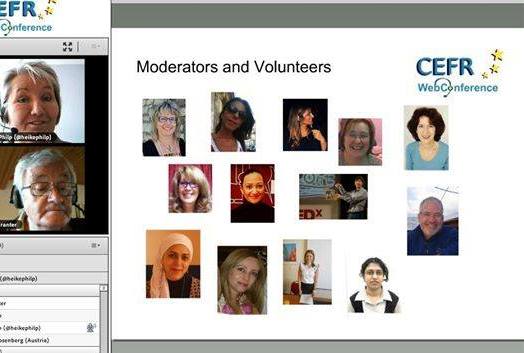
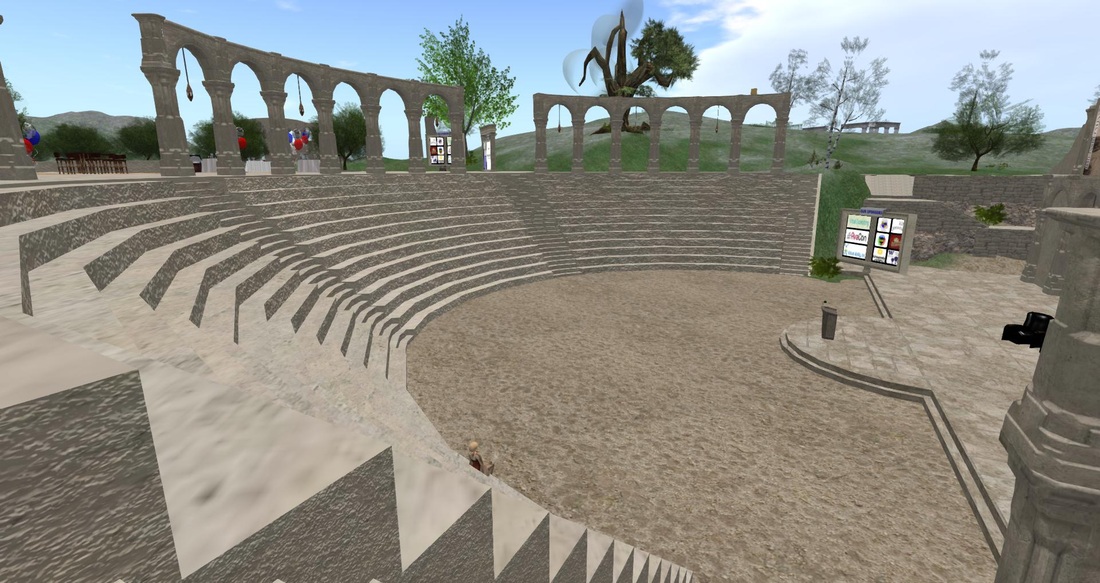
For the third annual SL MOOC 2016, Second Life® was at its best once again, with amazing professionals in the field of teaching in Virtual Worlds, presenting, amongst an array of topics and prominent professionals, different aspects of using virtual environments to enhance their learners' educational experience. On Pionia Destiny's (Doris Molero) plot, Heike Philp enthusiastically presented the outcome of EVO ViLLAGE 2016* and the moderators' team, together with the usefulness and necessity of training teachers to create games in 3D world. On 28th April 2016, on EduNation Island, with my presentation "Lessons from a Skybox - Using SL immersive environments to teach EFL", I explained how 3D World can bring on positive backwash effect for different types of learners on exam oriented classess. Based on a short scale survey, learners find lessons in Second Life® useful, interesting and friendly. According to this mini survey, confidence is boosted in the target language, learner concentration span increases, course participants prepare for real-life scenarios and they become more observant through "digital events" in this VW. Through holodeck scenes especially created for the purposes of language lessons, learners are given witty tasks to carry out which encourage language in use, natural communication and promote language development, while at the same time learners acquire new digital skills which enhance cognition and different domains of learning. The third annual Second Life MOOC 2016 was an unforgettable series of educational events wonderfully hosted by Dr. Doris Molero (Prof. English, Urbe University), Dr Nancy L. Zingrone (Prof. Psychology, Northcentral University), and Dr Nellie Deutsch (Curriculum Consultant, Online Facilitator, University of Phoenix online). (Pionia Destiny, Maggie Larimore and Nellie Homewood, avatar names in SL). The MOOC took place from April 1-30, 2016 and its theme this year was "Connecting for learning in Virtual Worlds". On my part, I presented an aspect only of the multi-purposeful, interdisciplinary use of 3D environment, for the purposes of teaching English as a Foreign Language. Thank you Doris, Nellie and Nancy. Looking forward to more SLMOOC events to come in the future. Helena Galani * EVO ViLLAGE stands for "Virtual Language Learning and Gaming Environments"
0 Comments
It has been almost a year now since I embarked on MachinEVO course for language teachers online. Since my CAMELOT award (1st prize) and as Moderator of this year's EVO ViLLAGE, I have developed a new approach to viewing teacher education which opens up new paths to education and teaching. All this along with my personal strong convinction of the usefulness of Virtual 3D environments in education, encourage me to reflect on my own experience during the 8th SLanguages Annual Symposium 2015 (which I had inadvertently omitted) . The Symposium came as a most outstanding event just before the end of a year characterised by vigorous activity at all levels in the world of education. With EduNation Island, Second Life® being a hive of activity for many years now, the Symposium came, once again, to confirm the ongoing effort, unfaltering energy and care which are invested in quality education to create and maintain learner supportive environments, to improve living standards, and promote levels of sustainable development. During the 8th SLanguages Symposium, speakers from around the world reflected on their recent professional experience with teaching and researching in 3D environments. Moderated by Professor Randall Sadler, (University of Illinois, Dept. of Linguistics, co-owner of EduNation islands in Second Life), Heike Philp (co-initiator of EU funded LANCELOT, AVALON and the CAMELOT project), Christel Schneider (Research Assistant for the CAMELOT Project at the University of Central Lancashire, founder of CSiTrain), Carol Rainbow (author, ICT consultant & teacher trainer), Helen Myers (teacher of French, Chair of London ALL), Shelwyn Corrigan (Learn IT Town, University of San Fransisco), Ann Nowak (ELT teacher), Hazel Workman (3D animator, technology consultant) and Helena Galani (ELT/EAP educator, assessor), the successful event provided ample evidence of the tireless and powerful work being done in Virtual Worlds for education. Amongst other prominent presenters and researchers*, Keynote Speaker Stylianos Mystakidis (Learning Technologist and E-learning Manager, University of Patras, Centre for Vocational Training) focused on "Social Virtual Reality: Open Education’s Surprising Secret Sauce" by guiding us through a series of exciting activities to stimulate learners' mind in our classrooms. On 14th November, the first day of the Symposium, surrounded by an enthusiastic and creative group of like-minded colleagues, I presented the usefulness of "SL Machinima for Young & Teenage Learners". The recordings for my presentations can be viewed on the SLanguages webpage and my slides are uploaded here: Also, below please find the slides for my presentation on "From Board Games to Role Plays" (15th November, 2015). The transformational experience in Virtual Worlds goes on and it has a lot to offer to all levels of education.
More news is coming up soon about this year's running TESOL EVO Virtual Language Learning And Gaming Environment course for teachers (EduNation Island, Second Life, 11/1 - 14/2/2016). Helena Galani * 8th SLanguages Annual Symposium Speakers:
This has been an amazing conference. For this year's Virtual Worlds Best Practices in Education conference, with MachinEVO and CAMELOT Project representatives we gathered eagerly for Mr Ebbe Altberg's opening keynote on March 18th. At the SL Main Auditorium, the Chief Executive Officer of Linden Lab (the makers of Second Life®, BlocksworldTM, DesuraTM), announced their development of a new next generation platform with expanding possibilities and new features to improve quality and to benefit its users, including educators. It was great pleasure (and relief) to see that LL's CEO is so friendly, open and eager to include the educators' community in their plans and to take extra session time to answer our Questions and Answers at the end of his keynote. For those educators appreciating machinima or having 'land' in SL who have not got the time to watch all the talk, here are a few of his key points on Linden Lab's future plans on the next generation platform:
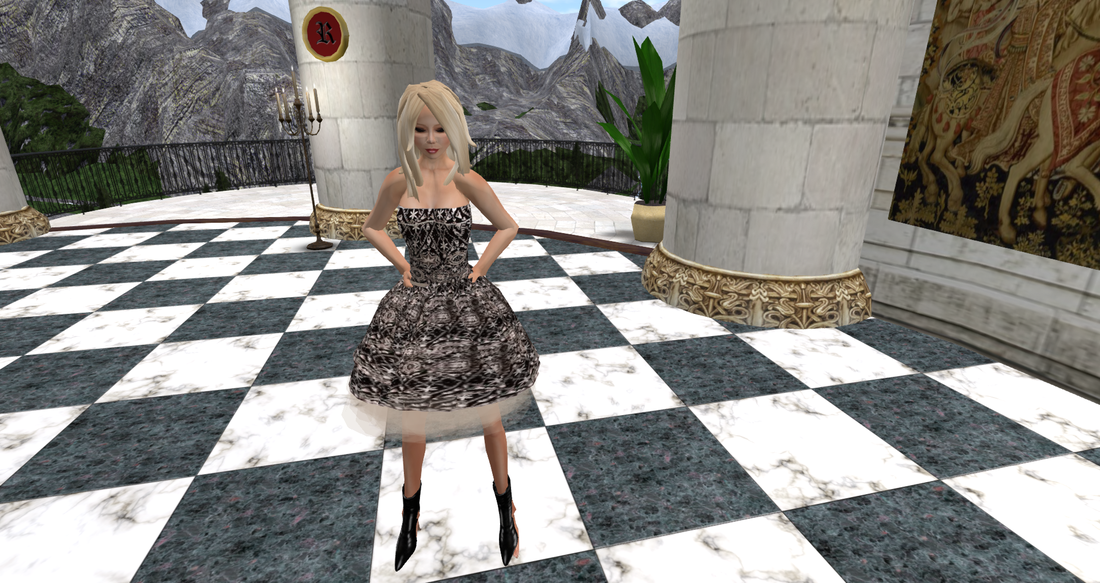
(not in speech marks in case there are possible inacuracies): As CAMELOT* Network Partner and standing for language teaching professionals interested in Teaching Machinima, it would be great ommission not to express how privileged and honoured Camelot would be to have a discussion with Mr Altberg surrounding educators in the current SL and the next generation platforms. Many thanks for being so open to and for the educational community. * CAMELOT stands for "CreAting Machinima Empowers Live Online Language Teaching and Learning". The project is coordinated by the University of Central Lancashire (UCLan), UK School of Language, Literature and International Studies. For past presentations in VWBPE, here are the links for Philip Rosedale's (CEO of High Fidelity and Founder of Second Life)and Ebbe Altberg's keynotes in VWBPE 2014. You may also wish to watch Philip Rosedale's TED talk on 'Life in Second Life' back in 2008. Hello Friends! This post has been inspired by those few learners who come to challenge their teacher's skills. It is for all my friends and colleagues who breathe only to cover their most difficult learners' educational needs, to motivate them and to help them improve their performance. It comes as a natural next step after years of work with inspirational and progressive colleagues, employers, and parents. And it is also inspired by my recent experience with dedicated and skillful MachinEVO2015 moderators and coordinators who have been focusing on the use of Virtual Worlds to facilitate learning languages. This post does not simply refer to gamification. It comes as a natural consequence to reflect on the idea that innovation and creativity have been taking place throughout generations and they never stop. The average EFL learner may feel content with their books and (if lucky enough) an interactive whiteboard, but what about those who have been born with their finger on their game consoles? The majority of our students, especially the younger ones, have been playing Virtual reality games in their free time, so much so that they acquire new language from their favourite heroes - on a positive note - or get distracted from their school work -as a downside. However, Second Life® three dimentional virtual world gaming does not compare with other online or desktop experiences. So, why not try adding a totally new dimension in your everyday classes along with your coursebook or encourage your learners for some self access practice at their own time. You can get them to watch and make online machinima or, if they are adults, to 'go Inworld'. Using virtual world senaria in the classroom can be a most illuminating experience for your learners or your trainee teachers. Through Second Life® you can give them stimuli on which to observe, conceptualise and experiment by using role-play simulations for instance, to introduce new language, to help revise, practise or consolidate. Take my experience in Second Life® with the Gomez Family as an example. How would you feel if during the flight you fell off the plane and ended up at the bottom of the sea hairless, then having to fly after your plane? What language would you need to use to express frustration, amusement, complaint or anger to the pilot (Alfonzo Garavito Olivar aka Alfonzo Perfferle) or cabin crew? For language teachers, this inworld experience can inspire them to teach language connected with aviation or story-telling. For EFL learners, this simulation can stimulate their writing or speaking skills, for example. The future of storytelling has now changed through this medium which adds a new expression! You can use teacher-made or learner-made machinima for distance or blended learning, for in-class instruction or for learner/teacher self access. Or you could get your learners to make their own machinima but, mind you, it is not for inworld use with young learners as one needs to be 18 to enter Second Life. This may be a consideration for Second Life researchers and Developers to bear in mind if they are considering opening SL up to education. Still, to appeal to their young learners, teachers can use child avatars to promote their teaching aims. By using such a totally immersive environment as Second Life® (which is free and safe and should stay free especially for educational purposes), your classroom mirrors real life, promoting thus not only linguistic development but also social development, intercultural awareness, creativity, resourcefulness and multiple intelligences. It helps them improve their concentration levels, build determination and creative thinking. However, you need to carefully prepare lessons with linguistically relevant tasks on SL experiences, to activate your learners' target language skills, to help them express their cognitive and healthy emotive capacities. In case this is disregarded, you are bound to end up with a class using their own mother tongue. With a group of like-minded, well coordinated and cooperative educators, new material (machinima), tasksheets and holodecks can be created to promote learner reflexion in all languages, on situations resembling real-life or even inconceivable experiences such as dancing the night away with 'King Osna' and friends at 'Castle Renoir', flying to catch your plane, hugging the universe in a cosmic sci-fi galaxy or getting it off your chest at the Speaker's corner in Hyde Park - you name it. For those who are interested in the inside story, this very innovative medium of teaching has opened up horizons for scripting to build new scenes and to make your objects move, speak and interact like real life agents. So, what do you think? Get a Second Life® and Enjoy the experience ErlinaAzure (& Baby Tux) in SL BBSoon If you wish to learn more about machinima, you can read Christel Schneider and Carol Rainbow's 'Making and Using Machinima in the Language Classroom' on Scribd. Highly recommended! |
Please cite for any content you use from this web page.
Helena Galani, Archives
January 2021
Categories
All
Στους γονείς οφείλομεν το ζην, στους δε διδασκάλους το ευ ζην. |